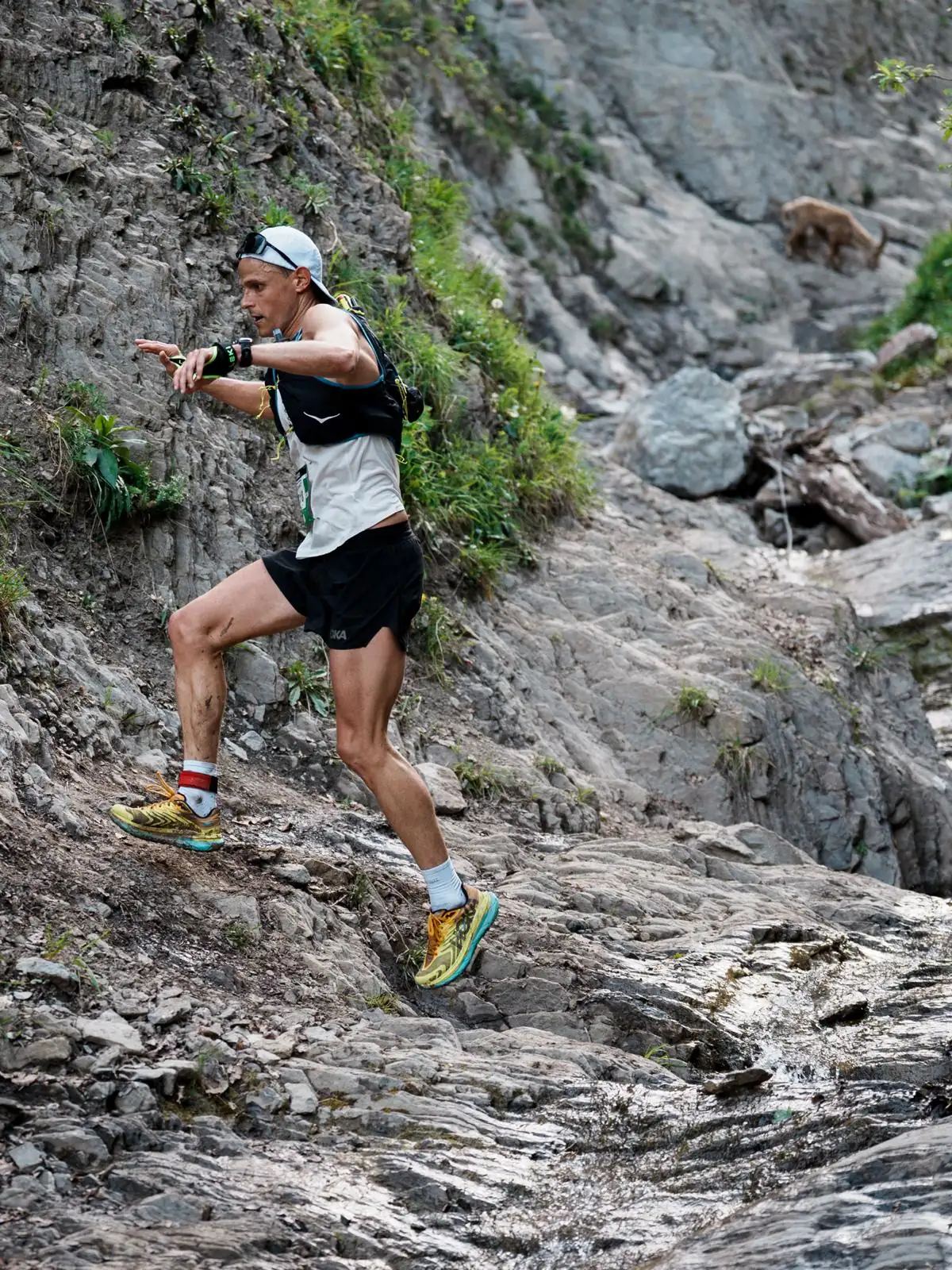
Trail & Ultra Coaching
train your body and your mind
Personalized trail coaching for executives and leaders. A plan adapted to your schedule, trail-specific nutrition, mental management and climbing strategy.
The real problem of the executive who wants serious trail running
You don't lack the will, you lack a system. Most ambitious executives who get into trail running run more on enthusiasm than on plan: long weekend outings, midweek sessions squeezed between two flights, no real progression logic. The result is predictable — chronic fatigue, late-race DNFs and the painful feeling of always preparing the next race without ever truly being ready. Trail running is not running with elevation. It's a discipline with its own demands: terrain reading, climbing-descending economy, eccentric muscle preparation, energy management over hours, controlled breathing and a mental framework strong enough to hold under sleep deprivation. Without a structure that translates those demands into actionable weekly sessions, the executive trains hard… and progresses little. The right method makes 6 to 10 weekly hours enough to attack a 20km, a long trail or even an ultra — provided every session has a clear reason for existing.
Preparing for your next race? Start with my guide on building a trail training plan.
What most amateur trail runners don't know
Four blind spots that decide more races than fitness ever will.
Mismanaged breathing
Around 40% of runners suffer from avoidable exertional dyspnea: jaw locked, shallow chest breathing, broken cadence. A clean diaphragm protocol unlocks an immediate gear, especially on climbs.
Walking climbs strategically
On most slopes, fast walking is faster than jogging — and 30% cheaper in energy. Knowing when to switch, with what posture and what rhythm, is a trained skill, not instinct.
Mental & strategy, not the engine
Failure in trail is rarely physical: it's mental and strategic. Bad pacing in the first hour, no pre-built race plan, no protocol for low points — the result is a DNF that had nothing to do with fitness.
Poorly calibrated trail nutrition
Improvised fueling, sugar overdose, late hydration: most DNFs after kilometer 30 are stomach failures, not leg failures. Nutrition is trained like a session.
Mental preparation — the real terrain of ultra
In trail and especially ultra, it's almost never the engine that fails first — it's the mind. The lows that pile up, the pain that settles in, the urge to quit after dark: it's all trainable, exactly like elevation or nutrition.
In my coaching, mental preparation is built in from day one: managing the rough patches, inner dialogue, course visualization, a plan B for when everything unravels, and above all race decision-making — knowing when to push and when to ease off. That's what separates those who finish from those who crack.
I go deeper in my article on the mental limit in extreme adventure.
And if you want to step it up on the ground, join me at the Chamonix trail camp to prepare the 90 km du Mont-Blanc.
What your trail coaching includes
A complete framework, built around your calendar and your target race.
- Personalized weekly plan — flat running, climbs, descents, dryland strength
- Specific terrain work: technique on climbs, eccentric descents, ankle proprioception
- Trail nutrition protocol — training fueling and race-day fueling plan
- Race strategy: pacing, aid stations, pole transitions, low-point management
- Mental preparation: visualization, internal dialogue, sleep deprivation handling on ultras
- Gear advice — shoes, poles, pack, layering by season
- Real-time adjustment to travel, meetings and intense work periods
All levels, all distances (first 20km → 100km+ ultra)
Whether you're targeting your first 20km, a long mountain trail or an ultra of 100km and beyond, the method adapts. What doesn't change: a clear structure, sessions justified one by one and constant adjustment to your professional reality. Executives, founders, demanding parents — the schedule constraint is the starting point, not an excuse. The plan integrates it from day one.
Book my free discovery call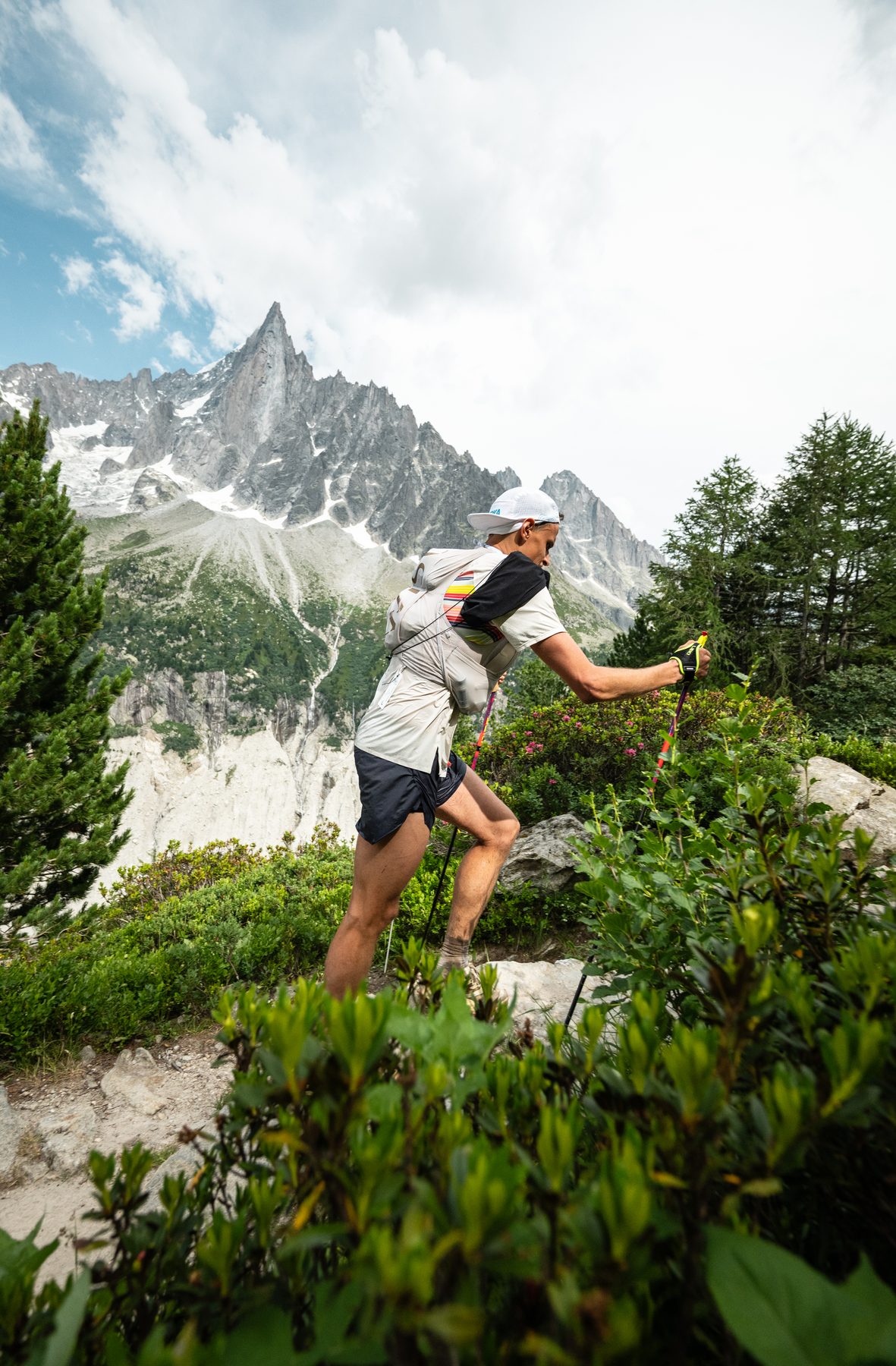
Prepare your season on the 90 km du Mont-Blanc course
5 days of immersion in Chamonix, 9–13 June 2027, to build your trail season, on one of the most legendary courses in the Alps. Led by Simon Thoret, coach and physio for the Décathlon·CMA CGM cycling team, and myself. Full board, limited spots.
Discover the Chamonix trail campHow I Work
Discovery call
30 minutes on video to define your goals, understand your athletic background and your environment.
Tailored program
Guidance and a plan built for your real life, adjusted every week.
Follow-up & progression
Weekly exchanges to evolve the planning with you and measure results together.
Start your trail journey
Tell me about your goals — I'll reply within 24-48 hours to set up your free discovery call.
Coaching Inquiry Form
Tell me about yourself, your goals, and what you're looking to achieve.
Explore other disciplines
Same methodology, different sport.